
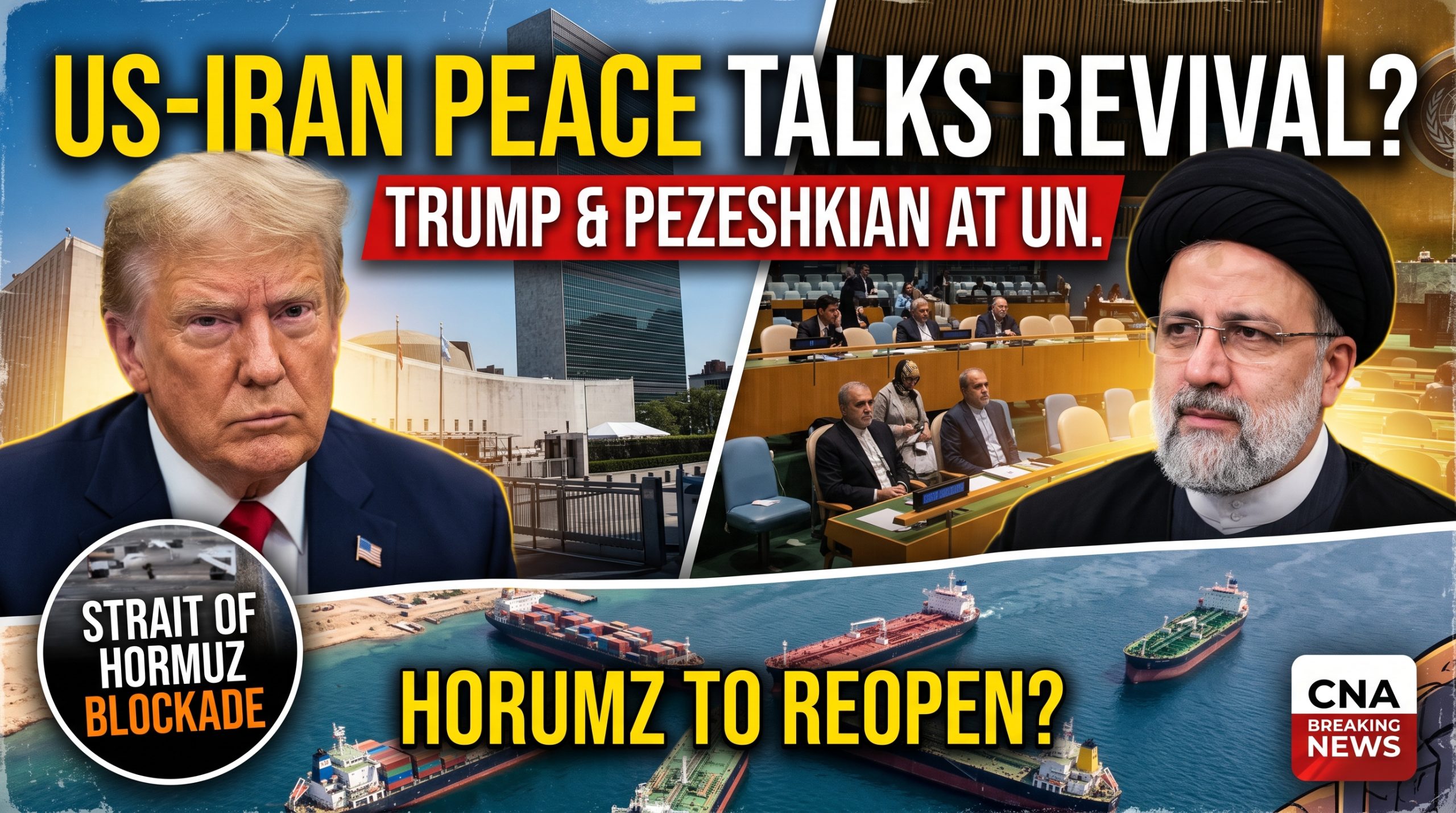
Iran and the United States have signaled a potential revival of negotiations to end their ongoing conflict, with both US President Donald Trump and Iranian President Masoud Pezeshkian scheduled to attend the UN General Assembly in New York. This marks the first UN assembly for both leaders since the US and Israel launched “Operation Epic Fury” against Iran in February.
Prospects of Diplomacy
While no direct meeting between the two leaders is currently planned, a senior Iranian official stated that Iran’s delegation possesses full authority to restart negotiations. Iran has reportedly communicated a proposal via mediators indicating it could reopen the Strait of Hormuz to Gulf shipping within seven days. This concession is contingent on the US lifting its blockade on Iranian ports and easing military pressure. “The UN General Assembly is a golden opportunity for the US to return to diplomacy,” the Iranian official emphasized, calling for Washington to officially announce its commitment to a diplomatic resolution.
US Secretary of State Marco Rubio noted that the US is open to discussions, “especially if it has the prospects of leading to something positive.” Trump, who noted on Sunday his openness to meeting with the Iranian president, is viewed by Rubio as a practical businessman for whom “there’s no harm in engaging and talking to someone.” However, Rubio maintained a firm stance, stating that Iran’s ruling clerics are “radical” and must never acquire nuclear weapons.
Regional Security and Gulf State Involvement
The backdrop of the UN General Assembly also includes critical meetings regarding regional security. Trump is slated to meet with leaders from Bahrain, Kuwait, Qatar, Oman, Saudi Arabia, and the United Arab Emirates. These Gulf states, which mostly host significant US military bases, are eager to restore shipping through the Strait of Hormuz but remain wary of empowering Iran.
At the center of discussions will be a Qatari proposal aimed at creating a common security architecture integrating Iran and the Arab Gulf states. According to Qatari Prime Minister Sheikh Mohammed bin Abdulrahman Al Thani, lasting security requires guarantees for Gulf states and expanded economic interdependence, rather than “repeated cycles of escalations and retaliation.”
Meanwhile, the conflict continues to spill over, deeply entrenching Saudi Arabia. Iranian-aligned Houthi fighters are advancing in Yemen and threatening Saudi oil exports through the Red Sea. Despite Saudi Arabia’s pleas for the US to rejoin the fight against the Houthis, Washington has thus far held back. Rubio acknowledged the US commitment to Saudi Arabia but highlighted the dangerous complexity of the conflict.
Despite these severe tensions, oil markets saw some relief as Saudi Arabia reportedly restarted operations at its East-West Pipeline, bypassing the disrupted Strait of Hormuz.