
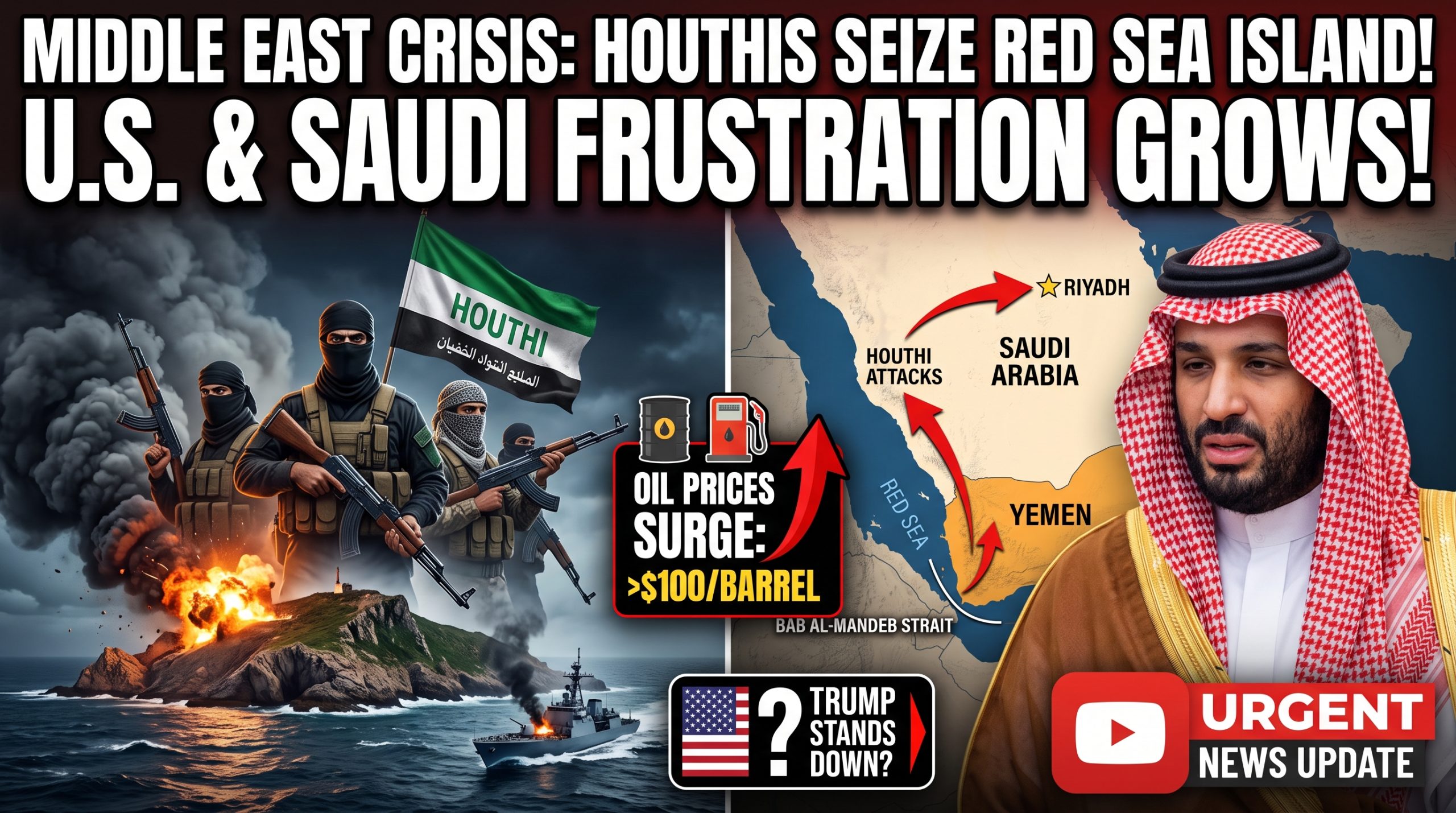
Dramatic recent advances by Iran-backed Houthi rebels have dealt another severe blow to a Middle East already reeling from the broader U.S. conflict with Iran. The militant group recently seized a strategically important island in the Red Sea, exacerbating an already severe global energy crisis that has pushed oil prices back above $100 a barrel.
Despite the escalating threat, neither the United States nor its key ally, Saudi Arabia, appears to have a clear plan to beat back the rebel group, leading regional leaders to question where a counteroffensive will come from.
While U.S. officials acknowledge that the Yemeni rebel group is advancing with the ultimate goal of taking control over the critical Bab al-Mandeb Strait, the Trump administration has signaled it has little interest in using the American military to directly stop them. Instead, Washington is relying entirely on Saudi Arabia to handle the kinetic fight. President Trump has reportedly drawn a “red line” against direct U.S. participation in offensive strikes against the Houthis, limiting American military support strictly to providing intelligence and targeting data for Saudi forces.
This approach is heavily frustrating both Gulf and American officials. Even with U.S. intelligence support, Saudi Arabia has struggled to effectively stop the Houthis from capturing key coastal towns in Yemen. Multiple sources express deep doubt that Saudi forces can stop the Houthi advances on their own.
The lack of direct U.S. intervention comes as the Houthis heavily escalate their attacks on the Saudi kingdom. In recent weeks, the Saudis have accused the rebels of targeting Mecca—Islam’s holiest city—while the Houthis claim to have successfully shot down a Saudi F-15 fighter jet. Furthermore, for the first time in the current escalation, warning alerts have sounded in the Saudi capital of Riyadh.
Gulf sources believe the Houthi offensive represents a dangerous new front in the ongoing conflict with Iran that could significantly prolong regional instability. The Houthis possess a deep and productive relationship with Iran’s Islamic Revolutionary Guard Corps (IRGC), which has trained and heavily supplied the group. Experts note that over the last 12 years, the IRGC has successfully elevated the Houthis from localized fighters into a devastatingly capable military force.
While analysts point out that the Houthis are not entirely “remote-controlled” by Tehran, they rely heavily on Iranian resources to fuel their campaigns as Iran pulls on its proxy networks to fight what it views as an existential battle.
Meanwhile, the Houthis appear emboldened by Washington’s hands-off approach. A senior Houthi official familiar with the matter stated that the group had received a message from the Americans indicating the U.S. did not want to join the Saudis in the direct conflict. “We received this message positively,” the official noted.
As the Saudi-backed government requires far more resources to take on the Houthis, Riyadh finds itself stretched incredibly thin—managing a wide array of security challenges, ranging from pipeline strikes to desperately attempting to secure vital oil tanker traffic in the Red Sea.